
Quantum-resilient design
ML-KEM (FIPS 203), ML-DSA (FIPS 204), and SLH-DSA (FIPS 205) are evaluated for protocols that can support them.
TVK Group / EnergieMIND security engineering
Quantum-era cryptographic planning, deterministic wallet authorization and the proposed SOVRA NeuroShield neural-inspired evidence architecture.
Scope transparency: This page describes standards and engineering objectives. It does not assert that experimental neural defenses, post-quantum blockchain signatures, or independent certification have been deployed.
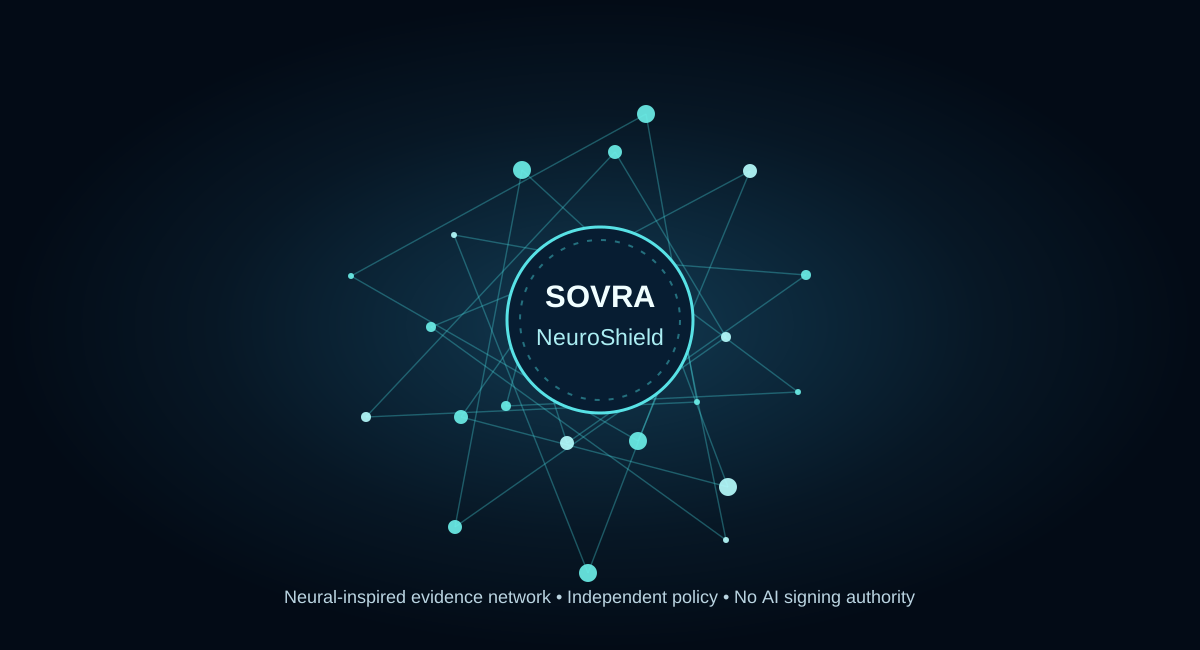
Independent evidence nodes analyze behavior and cryptographic risk. A deterministic policy boundary, not AI, decides whether an independently approved action may proceed.
ML-KEM (FIPS 203), ML-DSA (FIPS 204), and SLH-DSA (FIPS 205) are evaluated for protocols that can support them.
Cryptographic signatures must correspond to separate, policy-approved transaction intent; signer access alone is insufficient.
Explicit chain, contract, destination, amount, nonce and expiry verification; anti-replay and delegation controls.
Neural-inspired risk sensors may raise alerts or trigger review but cannot mint, transfer or unlock keys.
Workload identity, isolation, secret controls, provenance and controlled Railway release procedures.
Controls progress from designed to implemented, verified and independently assessed only with recorded evidence.
Our security specification requires independent transaction intent validation, isolation from compromised application and developer environments, default-deny unapproved EIP-7702 delegation, spending ceilings, and continuous chain reconciliation.
Designed → Implemented → Verified → Independently assessed. Each stage requires objective evidence for the stated product and deployment. No system is guaranteed unhackable.
Research resources: NIST post-quantum cryptography.
Our standards-based engineering roadmap covers cryptographic inventories, interoperability, anti-downgrade verification, key lifecycle management and supported deployment environments. Classical blockchain signatures remain exposed to their original risks unless on-chain authorization changes.
Specialized observers produce provenance-bound risk signals. Neural models remain unable to approve financial transactions or override deterministic authorization requirements.
Architecture requirements are not claims of deployed security. The public control register records each candidate safeguard as not yet verified until it has independent evidence.
View the CSA implementation-status register (JSON)